-

-
 Argentina (en)
-
 Australia (en)
-
 Belgien (de)
-
Belgique (fr)
-
België (en)
-
 Brasil (en)
-
 Canada (en)
-
Canada (fr)
-
 Česko (en)
-
 Chile (en)
-
 Danmark (en)
-
 Deutschland (de)
-
 España (en)
-
 France (fr)
-
 Hrvatska (en)
-
Ireland (en)
-
 Italia (en)
-
 Magyarország (en)
-
 Nederland (en)
-
 Norge (en)
-
 Österreich (de)
-
 Polska (pl)
-
 Portugal (en)
-
 România (en)
-
 Schweiz (de)
-
 Slovenija (en)
-
 Slovensko (en)
-
 South Africa (en)
-
 Srbija (en)
-
Suisse (fr)
-
 Suomi (en)
-
 Sverige (en)
-
Svizzera (en)
-
 United Kingdom (en)
-
 United States (en)
-
 Россия (en)
-
 Україна (en)
-
 日本 (en)
-

[Animals 101] How To Breed & Care For Alpacas
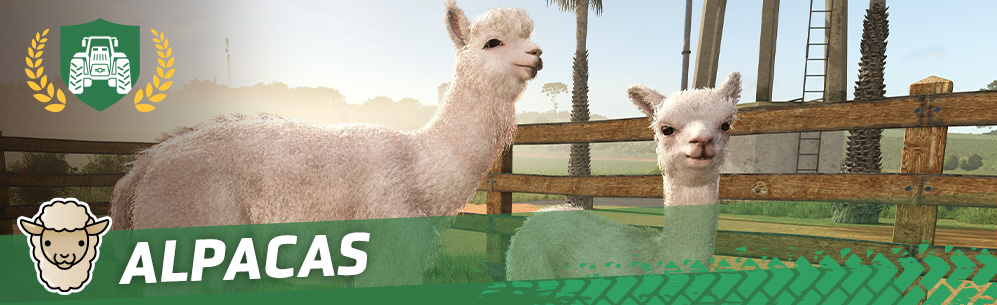
Welcome to your next "Animal 101" lesson of the Farming Simulator Academy! Today, we're focusing on alpacas. We'll show you how to house and feed your fluffy companions, keep them happy, shear their fleece and turn it into useful products. Let's start!
What Is Special About Alpacas?
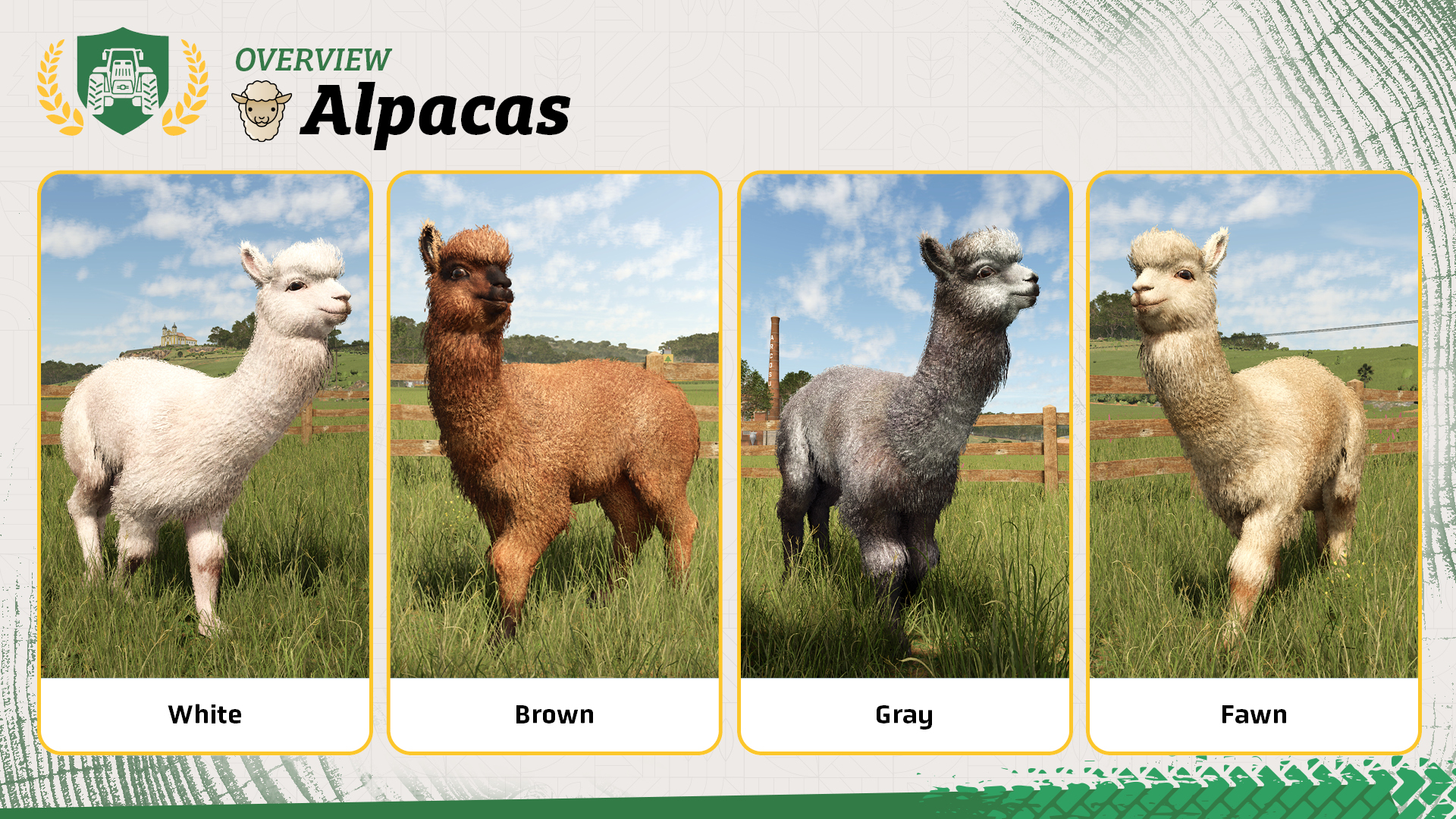
Alpacas come in four different colors: white, grey, brown, and fawn. The difference is purely visual.
Unlike sheep, alpacas don't produce wool automatically. Once a year, you need to shear them to collect their fleece. Alpacas also have a happiness value which influences the amount of fleece. Taking them for regular walks keeps them happy and adds another hands-on activity to taking care of your animals.
Housing Options
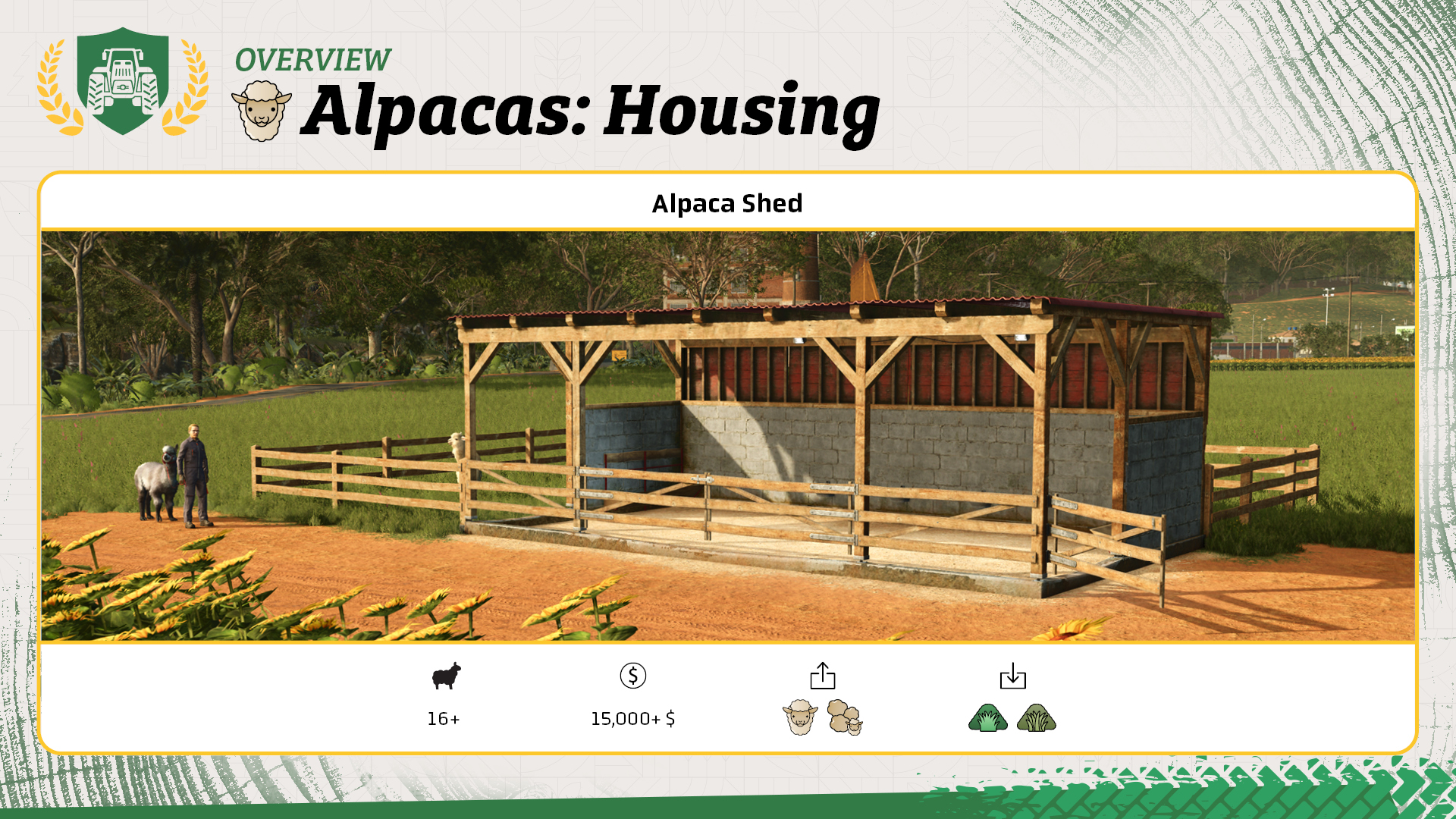
There is one important thing to remember when setting up your alpaca housing: shearing takes place inside the barn. When spring arrives and an alpaca is ready to be sheared, you'll have to lead the animal into the correct area before you can begin.
Tip! Make sure there's enough room to move around your alpacas comfortably. Leading one into the barn can become a little more challenging when its fluffy friends decide to stand in the way.
Feeding Options
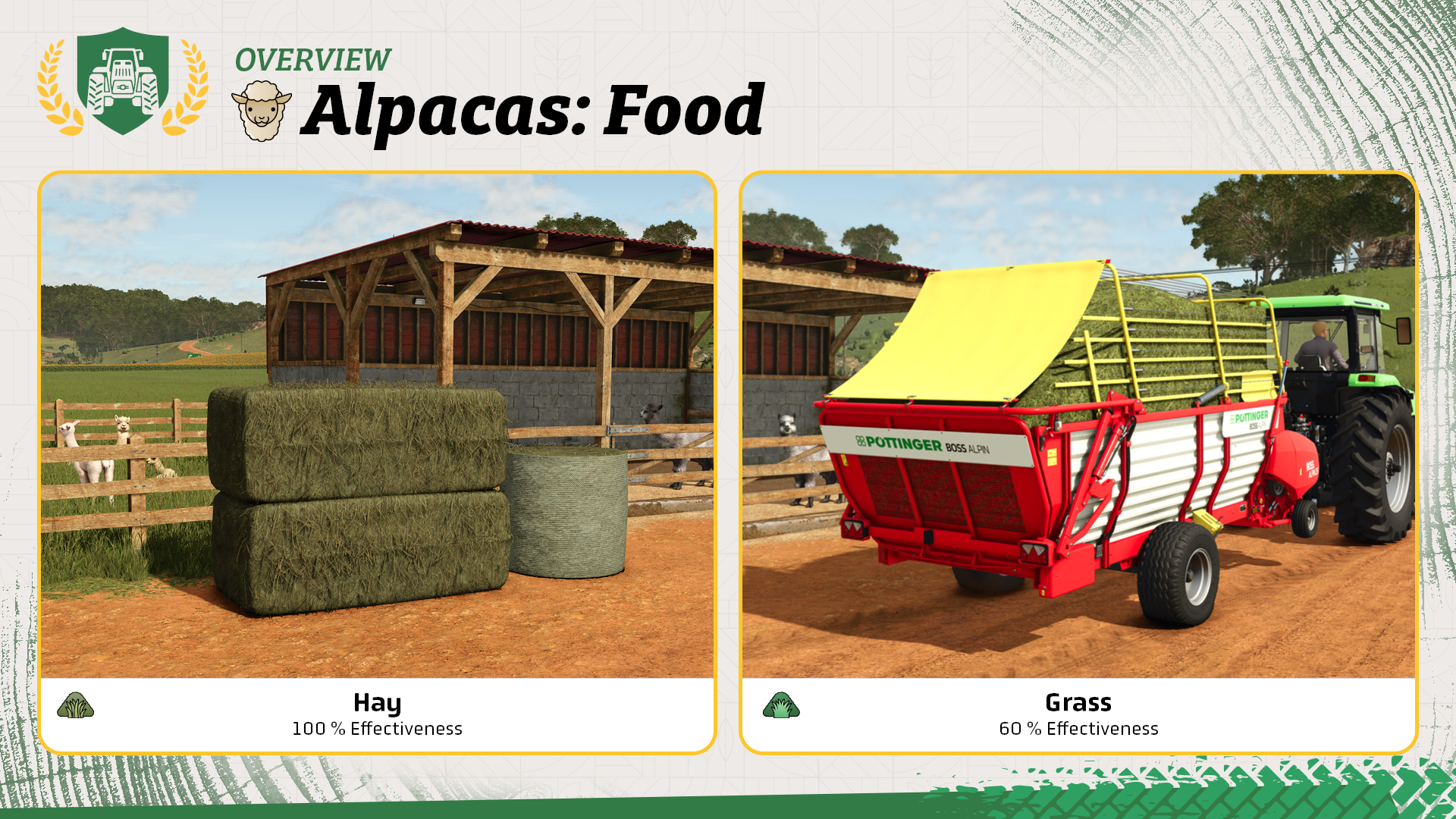
Alpacas are uncomplicated when it comes to food. Provide them with grass (for 60% effectiveness) or hay (for 100% effectiveness).
Tip! Meadow can replace grass delivered by you as long as it's available. Check the animal tab in the menu to make sure there is enough supply.
Breeding Alpacas
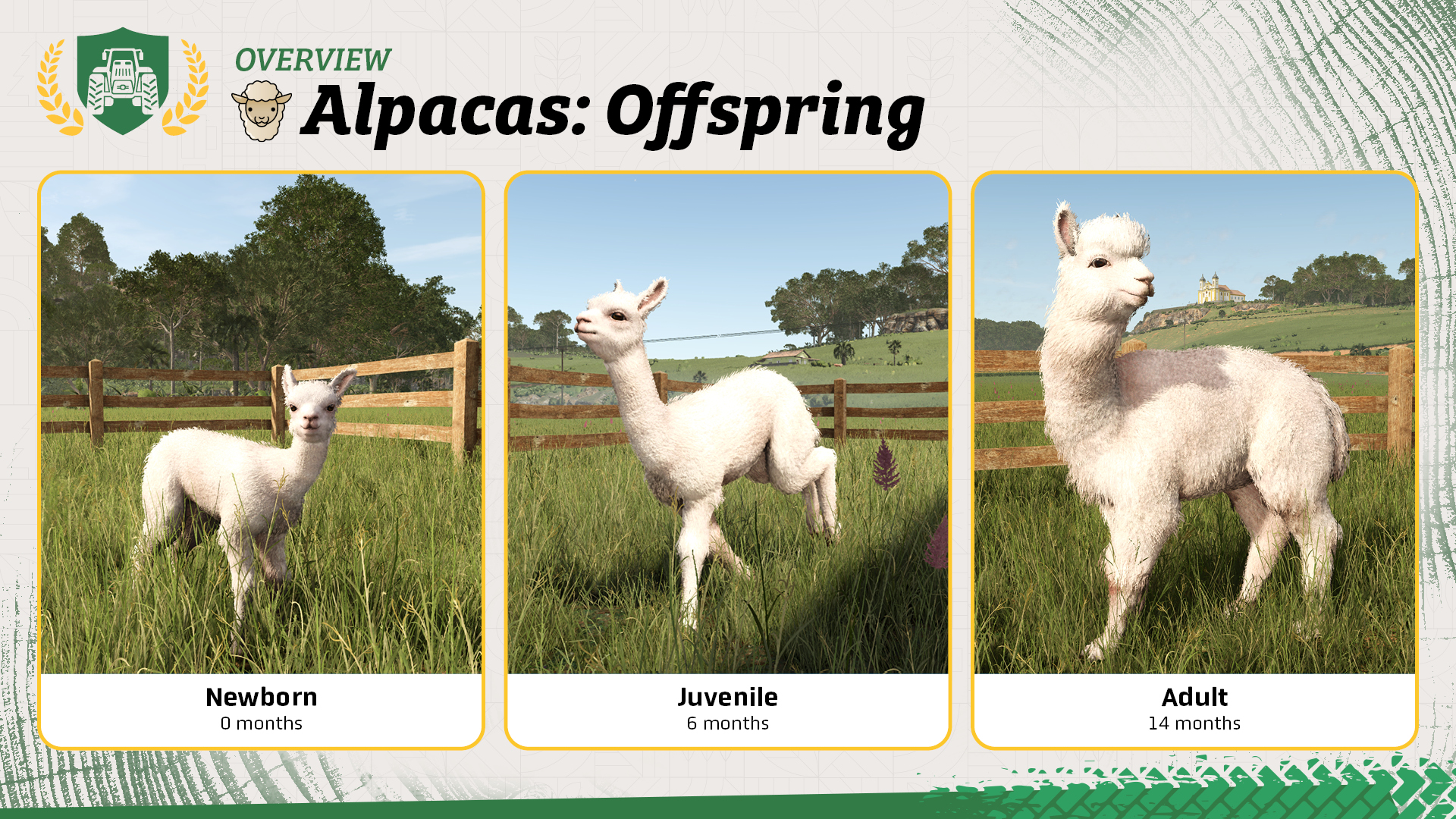
Alpacas can reproduce when:
- they are at least 14 months old,
- their health is at 100%, and
- there is free space for another animal.
Keep your alpacas properly fed to maintain their health.
What You Need For Alpacas
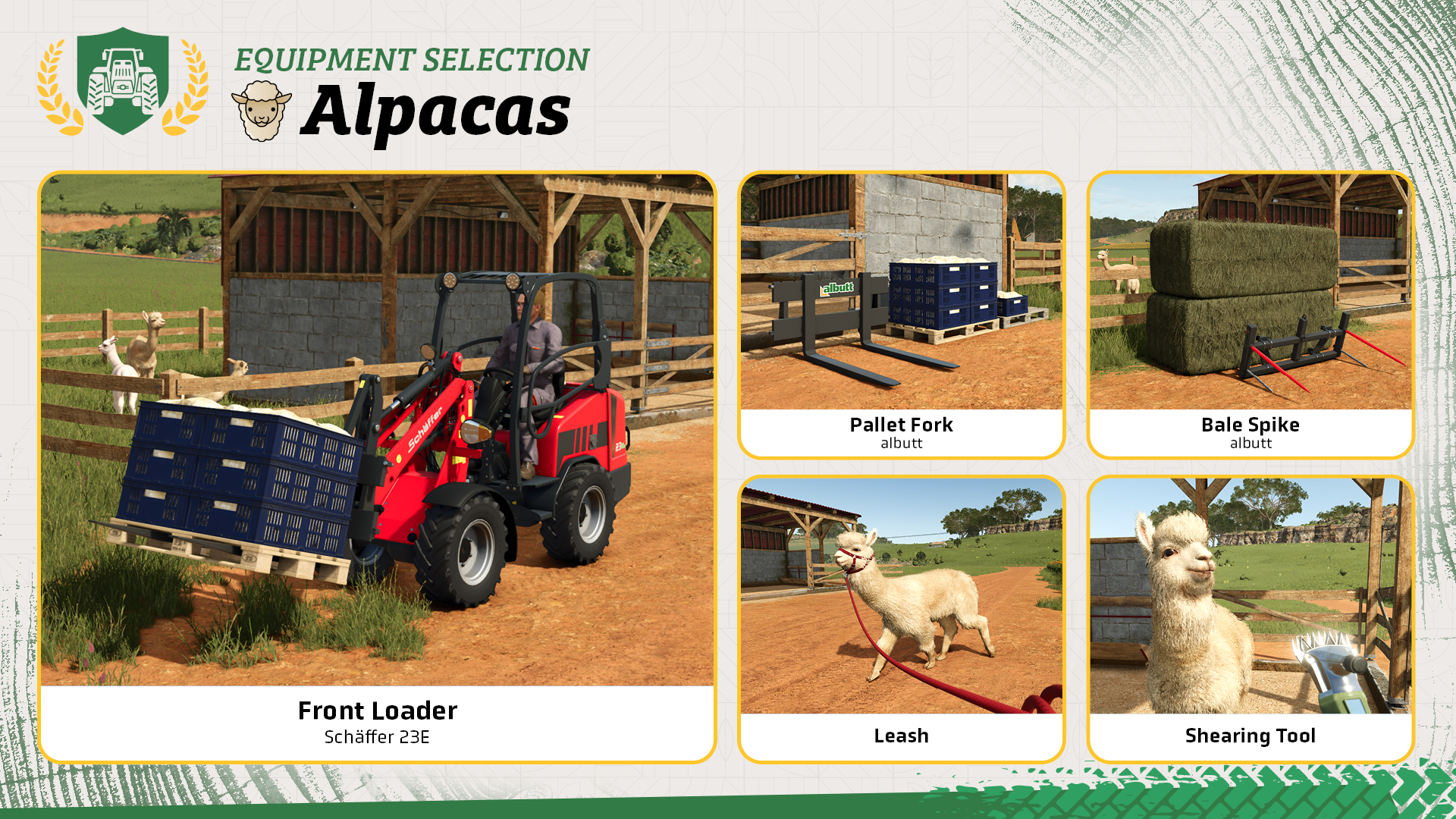
Basic equipment:
- Front loader and loading equipment: Use a bale spike for bales and a pallet fork for pallets such as fleece.
- Leash: Required for taking alpacas on walks and guiding them into the barn for shearing.
- Shearing tool: For shearing alpaca fleece.
Optional: Transporting alpacas yourself
- Use a compatible animal trailer if you want to transport alpacas yourself instead of paying for direct delivery.
- Look for the alpaca icon to make sure a trailer supports alpacas.
- Larger trailers may require a truck or dolly. Check the displayed "Combinations" before buying.
Let’s Get To Work!
Now that you know what alpacas need, let's get your fluffy new livestock settled on the farm.
Step 1: Buy alpacas
- Place suitable housing for your alpacas.
- Choose between white, grey, brown, and beige animals.
- Remember that younger alpacas start without harvestable fleece. Their fluff begins to grow as they get older.
Step 2: Feed and care for the alpacas
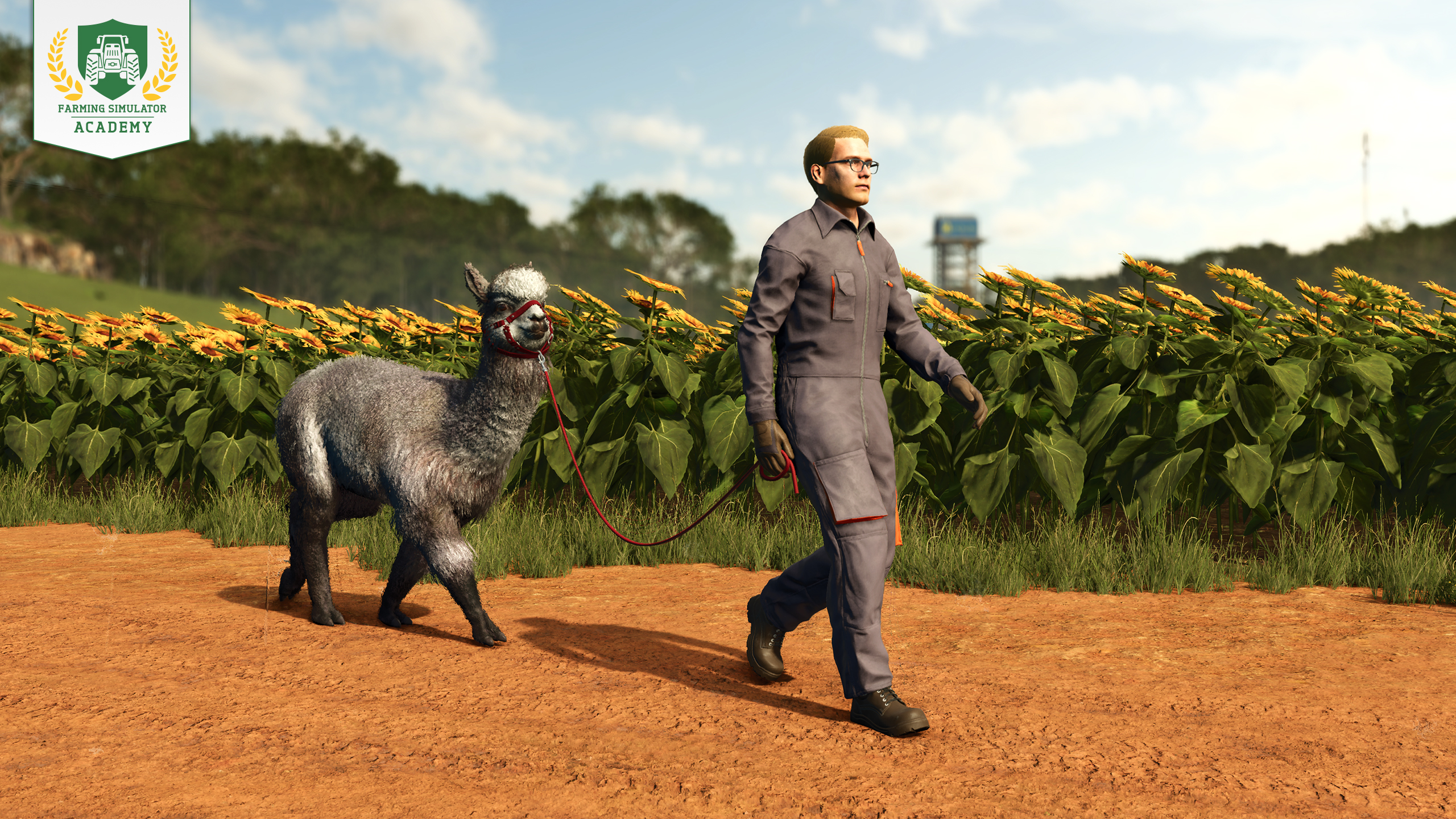
Provide grass or hay and regularly check the animal screen in the menu to make sure everything is supplied. Don't forget about their happiness, either: use the leash and take your alpacas for their required walks. With the standard time setting, a walk is required once per day. If you play with twelve days per year, this becomes once per month.
Step 3: Shear your alpacas
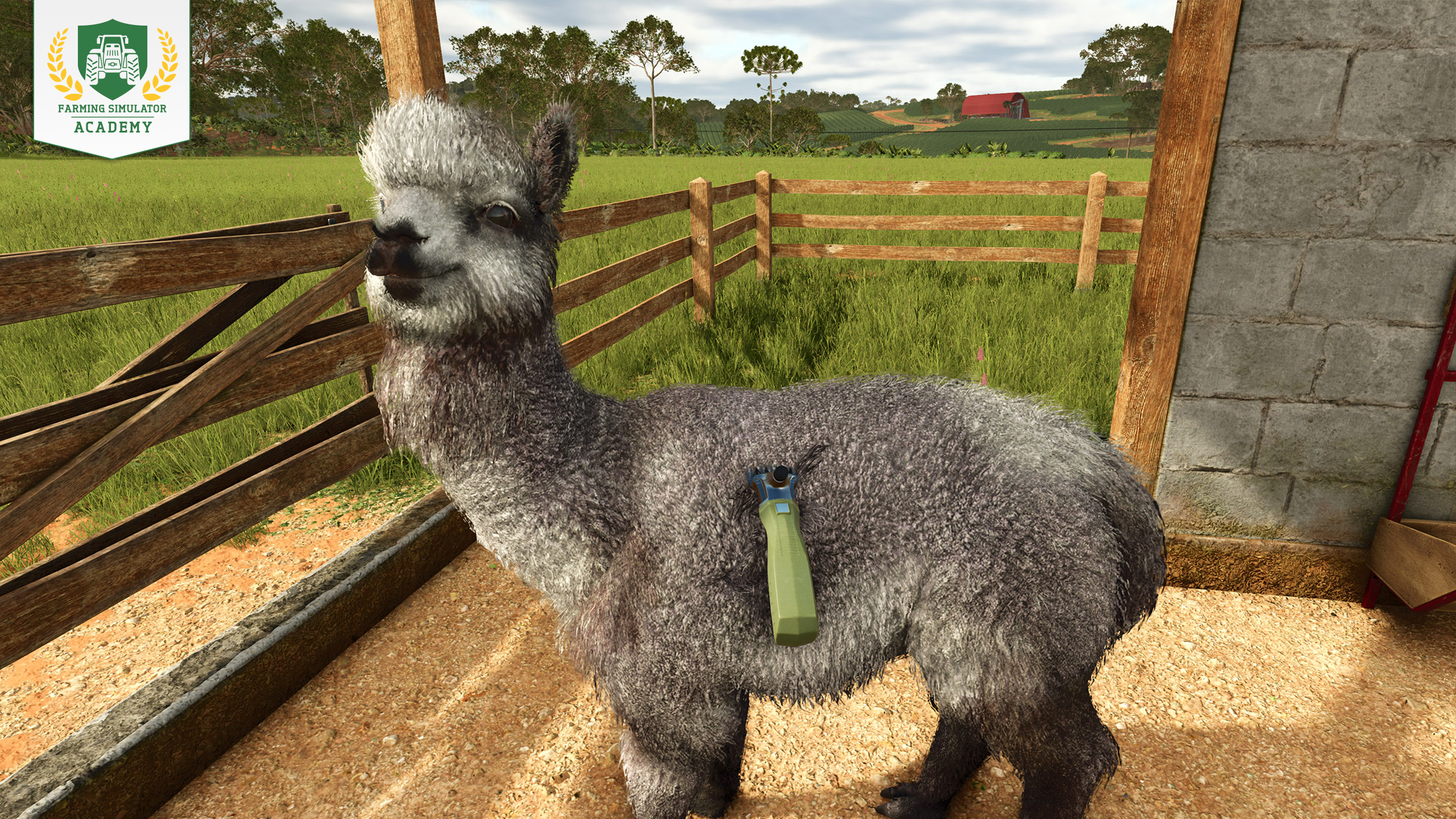
When it's time for the annual shearing in spring, lead an alpaca into the barn. Shear your alpaca and repeat the process for your other alpacas, or hire a worker to do the job for you. Once shearing is complete, a pallet containing alpaca fleece appears next to the barn.
Step 4: Sell or process the fleece
Move the fleece pallet from the barn and decide what you want to do with it. You can sell the fleece or use the available production facilities to turn it into alpaca wool and various products.
Processing Alpaca Fleece: Products
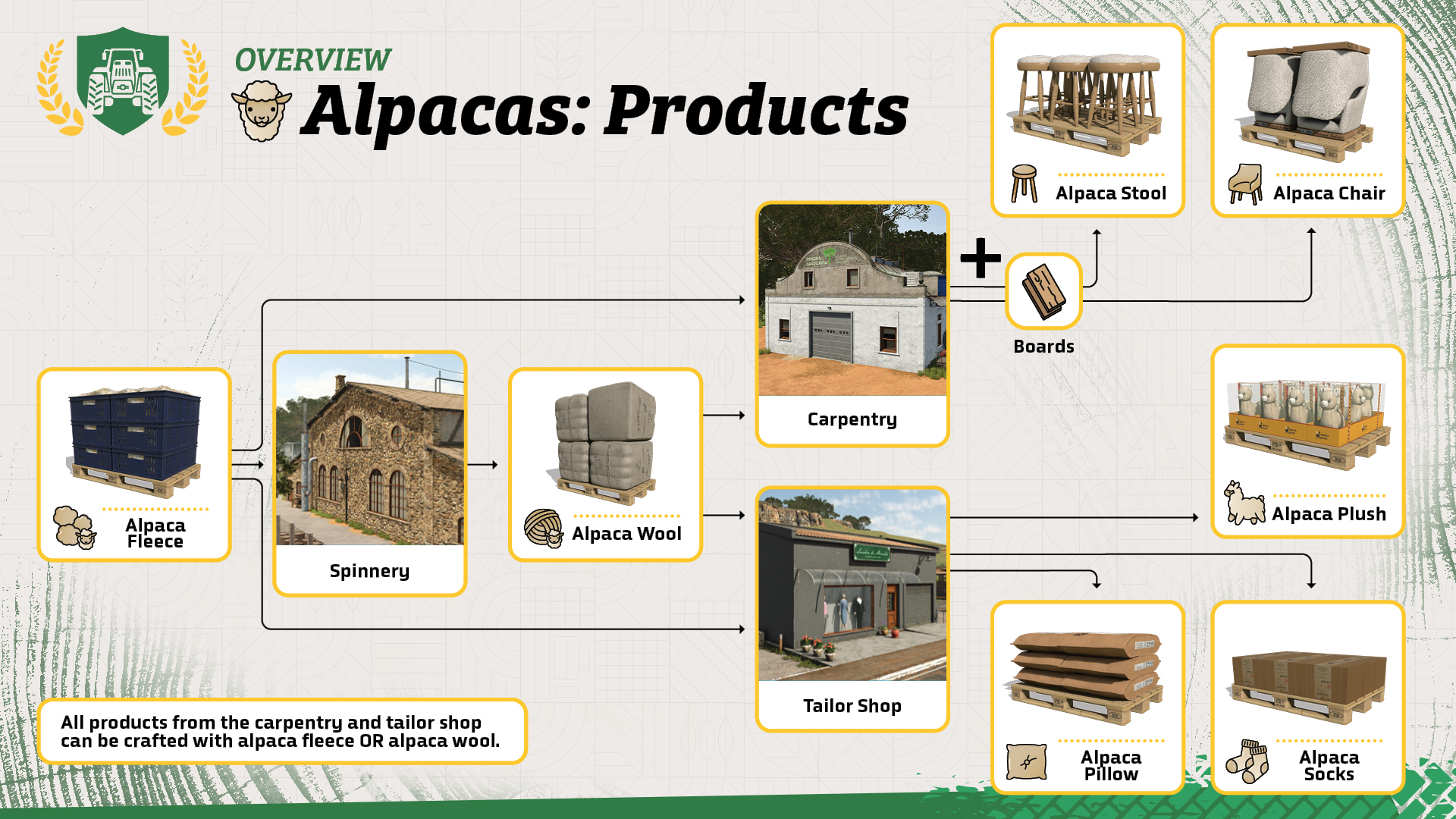
Instead of selling alpaca fleece directly, you can use it as the starting point for several new production chains.
- Alpaca wool: Deliver alpaca fleece to the spinnery to process it into alpaca wool.
- Alpaca plush, pillow, and socks: Alpaca materials can be processed at the tailor shop into several fluffy products.
- Alpaca chair and stool: The Carpentry adds a furniture branch to the alpaca production chain.
Tip! Processing your fleece requires more steps, but finished products can increase the amount of money you get from your alpacas.
Well Done!
Congratulations! You now know the basics of keeping alpacas in Farming Simulator. When you're ready, continue with the next Farming Simulator Academy lesson!


One last Factsheet Friday before launch! 🚜 Discover John Deere, Mercedes-Benz, Randon, New Holland & Stara equipment coming with Beans & Alpacas on October 27. Check out the final batch! 🌱 🔗 https://t.co/KGeOIzHeIa https://t.co/MgoHm1OKfr

The countdown continues! 🦙 Join Benni and Stefan Maurus for our FS25: Beans & Alpacas Pre-Release Show on October 22 at 6 PM CEST. Get a closer look at the expansion ahead of its October 27 launch! Tune in on YouTube! 📺 🔗 https://t.co/NKgUwdoMza https://t.co/n9Yv9rvg2l

Ready for Bale Race? 🚜 We’re teaming up with Fendt at the 99th National FFA Convention & Expo! Join us in Indianapolis, Indiana, October 21–24, 2026, and put your Farming Simulator skills to the test. See you there! 👋 https://t.co/UqFCTpMqdK

Welcome to Catuaí! 🦜 Explore rolling hills, red soil and tropical wildlife on the new map inspired by rural Brazil in FS25: Beans & Alpacas. Take a final tour before launch on October 27! Check our blog for more info! 👇 🔗 https://t.co/3pezydObfC https://t.co/axJVl4QpS9

Social Media


One last Factsheet Friday before launch! 🚜 Discover John Deere, Mercedes-Benz, Randon, New Holland & Stara equipment coming with Beans & Alpacas on October 27. Check out the final batch! 🌱 🔗 https://t.co/KGeOIzHeIa https://t.co/MgoHm1OKfr


